
Reusable components in WordPress themes save time, ensure consistency, and simplify maintenance. These prebuilt code blocks – like headers, footers, or content sections – can be used across pages and projects. Here’s what you need to know:
- What They Are: Self-contained blocks of code combining layout and styling, managed centrally in WordPress.
- Types:
- Local Components: Page-specific, stored within block data for unique layouts.
- Global Components: Site-wide, stored in a database for consistent design.
- Why Use Them:
- Update once, apply changes everywhere.
- Maintain uniform design across projects.
- Simplify collaboration and onboarding for teams.
- Export/import components for reuse across sites.
- Setup: Use block themes, configure
theme.jsonfor global settings, and organize files into directories liketemplates/,parts/, andpatterns/. Tools like the "Create Block Theme" plugin can simplify this process. - Best Practices:
- Group related files for each component.
- Test extensively across devices, browsers, and plugins.
- Use debugging tools like
WP_DEBUGfor error tracking.
Reusable components streamline development and improve design consistency. Start small by identifying recurring design elements and turning them into reusable blocks.
Developing Reusable Components for Your WordPress Themes – Leesa Ward
What Are Reusable Components
Reusable components are like the building blocks of WordPress theme development. Just as you can use the same set of bricks to create different structures, these pre-built pieces of code allow you to craft various website layouts while maintaining consistency across pages and projects. This section unpacks the essentials of reusable components and highlights the differences between local and global approaches, helping you streamline your theme-building process.
Definition and Core Concepts
In WordPress, reusable components are self-contained chunks of code that combine layout and styling for specific functionalities. These can range from simple styling classes to fully functional content blocks. They are stored as a custom post type called "wp_block" and are designed to update automatically across your site whenever changes are made [1][3]. You can manage these blocks centrally under Appearance > Editor > Design > Patterns [1]. This centralized system ensures that, for example, tweaking the color of a button updates every instance of that button across your website.
Local vs. Global Components
To use reusable components effectively, it’s important to understand the distinction between local and global components.
Local Components
Local components are tied to individual blocks on a specific page or post. Their styling data is stored directly within the block itself, allowing for highly customized and unique designs. Even if the same class name is applied elsewhere, local components keep their styling isolated. You can also control where these styles appear – for instance, limiting them to the frontend or the editor [2]. This makes local components perfect for unique layouts or page-specific designs.
Global Components
Global components, on the other hand, are stored in a database for site-wide use. When you update the styles of a global class in one block, those changes automatically apply to every other block using that class, no matter where it appears on your site. Global components are listed in the Stylebook, a centralized location where you can view and manage all site-wide classes. You can even restrict global classes to specific block types, such as applying a class only to button blocks [2]. This approach is ideal for maintaining consistent branding and design across your entire site.
| Component Type | Usage Scope | Storage Location | Best Use Case |
|---|---|---|---|
| Local | Single page/post | Within block data | Unique layouts, page-specific designs |
| Global | Entire website | Global database | Consistent branding, site-wide elements |
Why Use Reusable Components
Reusable components play a crucial role in creating efficient designs and simplifying maintenance. They ensure consistency across your site since updates made to a component automatically propagate to all instances. This eliminates the need for repetitive edits and helps maintain a polished, cohesive look.
They also make collaboration easier. With well-organized components, team members can quickly grasp the site’s structure without wading through scattered code. For new developers, these standardized building blocks provide a clear starting point.
WordPress adds even more flexibility by allowing you to convert reusable blocks into regular blocks when you need to make custom changes that shouldn’t affect other instances [1]. Additionally, you can export and import reusable components, enabling you to build a library of elements that can be used across multiple client sites. This not only speeds up development but also ensures a consistent design standard across your projects.
Preparing Your Theme Framework
Building a strong foundation for your WordPress theme is crucial, especially when working with reusable components. A well-prepared framework can save you from future headaches and ensure a smoother development process.
Required Tools and Settings
To make the most of reusable components, your theme framework needs to support Full Site Editing. Block themes are ideal for this purpose because they natively handle reusable blocks, patterns, templates, and template parts through the Site Editor.
A key file in this setup is theme.json. Located in the root directory of your theme, this file plays a central role in configuring global settings and styles across your site. It integrates seamlessly with the WordPress user interface and allows you to define elements like color palettes, typography scales, spacing units, and other design tokens. These settings will cascade down to all your components, ensuring consistency throughout your theme [4][5].
Once you’ve configured theme.json, focus on organizing your theme files to align with these settings.
File Structure and Organization
Block themes in WordPress follow a standardized file structure, which helps streamline the management of components. Sticking to this structure ensures WordPress can easily locate and utilize your theme files.
Here are the key directories to include in your theme:
templates/: Houses the overall document structure, including the mandatoryindex.htmlfile [4].parts/: Contains template parts like headers, footers, and sidebars [4].patterns/: Stores reusable block patterns [4].assets/: Includes CSS, JavaScript, and image files [4][6].inc/: Often used for PHP classes or additional functionality [4][6].
For better modularity, consider organizing each component in its own subfolder. For example, group a component’s CSS, JavaScript, and template files together. This approach simplifies maintenance and makes it easier to update individual components in the future [7].
With your file structure in place, you can speed up the process by leveraging the Create Block Theme plugin.
Create Block Theme Plugin Setup
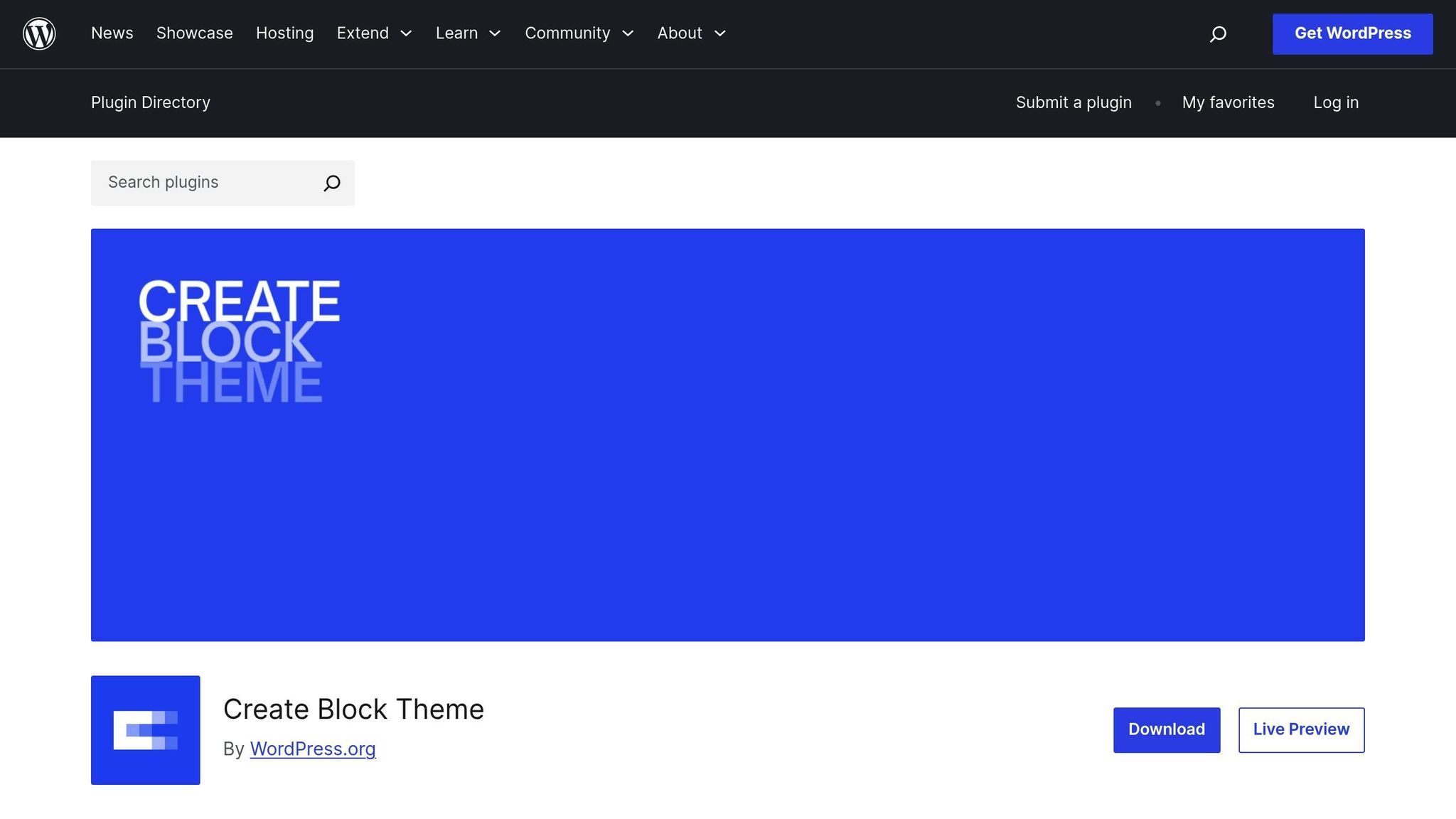
The Create Block Theme plugin is a handy tool that simplifies the creation of block themes and reduces the need for manual file setup.
Start by installing the plugin. Once installed, choose the "Create Blank Theme" option, which generates all the essential files and directories you’ll need for a modern block theme [8].
After creating your blank theme, use the WordPress Site Editor to establish your design system. This includes setting up color palettes, typography options, and spacing scales for your components. Then, begin building your initial block templates with the Site Editor’s drag-and-drop tools, focusing on how reusable components will fit within your page layouts.
Finally, use the plugin to export your work into a theme .zip file [8]. The exported theme will include a properly configured theme.json file, a clear directory structure, and basic templates – giving you everything needed to start crafting reusable components with ease.
Creating and Managing Components
With your theme framework ready, it’s time to dive into building nested components. These are key to improving your design’s flexibility and keeping your content well-organized. Let’s explore how to create and use them to streamline your layouts.
Creating Nested Components
Once you’ve set up your file structure and theme settings, nested components can take your site’s design to the next level. These allow you to place one or more blocks inside another, creating layouts that are both structured and visually engaging [9][10][11]. The Group block and Columns block serve as the primary containers for these nested designs.
To create a nested component, start by adding a Group block. Then, insert other blocks – known as child blocks – within it. For instance, imagine building a "Featured Product" component. You could use a Columns block to display an image on the left side and, on the right, a Group block containing a heading, text, price, and a button.
The beauty of nested components lies in their flexibility. You can easily rearrange elements without having to rebuild entire sections. Plus, keeping related elements grouped together makes content management more intuitive. The result? A cleaner design and a smoother user experience.
sbb-itb-77ae9a4
Development Best Practices
Code Standards and Documentation
Stick to secure coding practices to keep your code clean and safe. For example, validate and sanitize all incoming data by using functions like sanitize_text_field() and wp_kses(). To prevent cross-site scripting (XSS), always escape output with functions such as esc_html() or esc_attr(). Once your code meets these security standards, move on to thorough testing to ensure everything works as expected.
Testing Across Different Templates
Thorough testing is key to making sure your components work seamlessly across various WordPress environments. This includes checking functionality, accessibility, performance, and security to ensure your code is rock-solid [12].
Test your components across different WordPress and PHP versions, browsers, and devices. Tools like the Theme Unit Test Data can help simulate a variety of content scenarios. If you’re working with block themes, make sure to test how your components integrate with the Block Editor and Site Editor. Pay attention to custom templates, global styles (managed via theme.json), and block variations.
It’s also a good idea to test compatibility with widely used plugins, such as page builders, SEO tools, caching plugins, and form builders. This step can help you identify and fix potential conflicts early on.
To debug effectively, enable WP_DEBUG and WP_DEBUG_LOG in your wp-config.php file. Make sure WP_DEBUG_DISPLAY is turned off so errors are logged without being shown publicly. Finally, treat testing as an ongoing process. Regular, iterative testing helps you catch issues early and maintain stability over time [12].
Using WP Winners for Development
WP Winners serves as a go-to resource for developers looking to create, refine, and enhance reusable components. By incorporating their tools and insights into your workflow, you can streamline your WordPress theme development process.
Component Development Tools
WP Winners offers a curated selection of tools and plugins designed to simplify the creation of reusable components. From code editors to debugging tools and performance enhancers, their platform highlights resources that can significantly improve your development efficiency.
Learning Resources and Guides
Whether you’re just starting out or have years of experience, WP Winners provides a wealth of learning materials tailored to WordPress developers. Their tutorials, guides, and newsletters cover best practices in theme development, offering a solid foundation in component-based design. These resources also align with performance strategies, helping you maintain an effective and efficient workflow.
Performance and Customization Support
WP Winners also focuses on performance optimization and secure coding practices. Their platform makes it easy to find solutions for integrating components seamlessly into WordPress themes. Plus, their regularly updated content ensures you’re always in the loop with the latest trends and practices in WordPress development.
Summary and Next Steps
Reusable components are changing the game for WordPress theme development. Here’s the big picture: using local and global components can streamline your workflow, keep your file structure tidy, and ensure your naming and testing practices are solid. These components not only save time but also promote consistency and make site updates a breeze.
In fact, a 2024 survey by WPShout revealed that over 68% of WordPress developers have integrated reusable blocks or components into their workflows. Their top reasons? Saving time and achieving greater consistency. Sites that use these components report cutting development time for new pages or features by 30–50% [14].
To put this into action, start by identifying recurring design elements – think call-to-action buttons, product cards, or testimonials – and transform them into reusable components with clear, descriptive names. This approach can help you organize your projects and make updates far easier.
Testing is crucial. Regularly check and update your global components to ensure they work seamlessly with theme updates and plugin changes. Poorly named components, lack of documentation, or skipping testing can lead to maintenance headaches down the road [13][14].
As WordPress continues to focus on performance and maintainability, reusable components are becoming essential tools for developers. Use this knowledge to refine your process and stay ahead.
For further learning, WP Winners is a fantastic resource. They offer detailed tutorials, guides, and tools tailored to WordPress development, covering areas like performance optimization, security, and customization. These resources can help you grow your component-building skills and support you at any stage of your development journey.
If you’re just getting started, take on a small project. Build a handful of components, test them thoroughly, and expand your collection as you gain confidence.
FAQs
How do I decide which components should be reusable in my WordPress theme?
When deciding which parts of your WordPress theme to make reusable, focus on elements that show up consistently across your site. Think about components like headers, footers, call-to-action sections, or custom blocks. These are great candidates for reusability because they help maintain a consistent look and feel while simplifying updates.
Start by analyzing your site’s layout and functionality to pinpoint these reusable pieces. Tools like WordPress reusable blocks, shortcodes, or custom templates can make this process smoother, allowing you to manage and maintain your theme more effectively. By prioritizing reusable components, you not only save time but also make your WordPress projects easier to scale.
What are the advantages of using the ‘Create Block Theme’ plugin to build reusable components in WordPress?
The ‘Create Block Theme’ plugin simplifies building reusable components in WordPress by enabling modular, block-based designs. This method helps maintain consistency across your site while making updates and adjustments easier to manage.
With this plugin, you can develop a unified design system using reusable blocks. This not only boosts efficiency but also ensures your WordPress site maintains a polished and professional appearance as it evolves with new features.
How can I make sure my reusable components stay compatible with WordPress updates and plugins?
To ensure your reusable WordPress components stay compatible with updates and widely-used plugins, adhere to WordPress coding standards and design them around the WordPress plugin architecture. This approach promotes consistency and minimizes the chances of conflicts.
Always test updates in a staging environment before rolling them out to your live site. This precaution helps you catch and address any issues early. It’s equally important to maintain full backups of your site, so you can quickly restore it in case of unexpected errors or conflicts.
Keeping up with plugin and theme updates is another key step. Regularly check support forums and update logs for potential compatibility issues. Make it a habit to test your components with the latest versions of WordPress and popular plugins. These proactive measures will help your components stay dependable and functional as the platform evolves.